PAGINA: Decoding the Ancient Latin for Book Page and the Essence of Veraltet Buch Blattseite
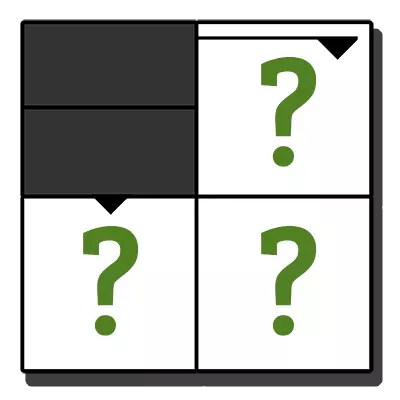
In the vast tapestry of language, some words stand as venerable relics, offering glimpses into bygone eras and the evolution of human communication. Among these is PAGINA, a term that, while perhaps not commonly used in everyday discourse today, carries profound historical and linguistic significance. For those delving into linguistic history or deciphering challenging crossword clues, PAGINA emerges as the perfect descriptor for what the German phrase Veraltet Buch Blattseite signifies – the obsolete or archaic Latin term for a book page. This article will unravel the etymology, historical usage, and lasting legacy of PAGINA, demonstrating why understanding this ancient word is crucial for enthusiasts of language, history, and even Crossword Clues: PAGINA, The Archaic Term for Book Pages.
The Ancient Roots of PAGINA: From Vineyards to Manuscripts
To truly appreciate PAGINA, we must journey back to its origins in classical Latin. The word derives from the Latin verb pangere, meaning "to fasten," "to fix," or "to plant." Initially, its core meaning was associated with something fixed or delineated. For instance, in agriculture, pagina could refer to the rows of vines in a vineyard, neatly fixed and aligned. This agricultural sense of ordered rows soon found a parallel in the realm of writing.
Imagine the earliest forms of written communication: inscriptions on stone, clay tablets, or scrolls. As writing evolved and became more structured, lines of text were arranged in orderly rows on a surface. It is from this concept of fixed, parallel lines that PAGINA transitioned to mean a "column of writing" and, eventually, a "leaf" or "page" of a book or scroll. The connection is clear: just as vines are arranged in fixed rows, so too are words and sentences on a page.
This early etymological journey explains why PAGINA is considered veraltet (obsolete or archaic) when seeking a direct German or English equivalent for "book page" in modern context. While "page" (English) and "Seite" (German) are the common terms today, PAGINA encapsulates the foundational concept from which these modern words ultimately derive, often through fascinating linguistic detours.
PAGINA Through the Ages: A Journey Across Scrolls and Codices
The usage of PAGINA tracks the evolution of books themselves. In ancient Rome, scribes meticulously copied texts onto papyrus scrolls. While scrolls were continuous, the written content was often arranged in columns, or paginae, making the term perfectly apt for describing a section of text on the rolled medium. With the advent of the codex – the bound book as we know it today – PAGINA gained even greater prominence.
Medieval monks in scriptoria used PAGINA to refer to individual leaves or sides within their laboriously crafted manuscripts. These pages were not just carriers of text but often elaborate works of art, adorned with illuminations and intricate calligraphy. Understanding PAGINA in this context helps us appreciate the physical object of the book itself, not merely its content. Each pagina was a canvas, a unit of information, and a testament to scholarly dedication.
The invention of the printing press by Gutenberg in the 15th century revolutionized book production, but the underlying terminology, including PAGINA, persisted. Early printers continued to think in terms of pages, layout, and composition, building upon centuries of scribal tradition. Although the term itself might have been gradually replaced in vernacular languages, its conceptual framework remained indispensable for the organization of knowledge. This historical progression underscores why Veraltet Buch Blattseite isn't just a linguistic curiosity but a window into the historical craft of bookmaking.
Decoding "Veraltet Buch Blattseite": Why Archaic Terms Still Matter
The phrase Veraltet Buch Blattseite directly translates to "obsolete book page." This concise description perfectly encapsulates the essence of PAGINA. While Latin remains a foundational language for scholars, scientists, and legal professionals, its direct use for everyday objects like a "book page" has largely faded from common speech in most modern European languages. So, why should we care about an archaic term for something so commonplace?
Firstly, understanding such terms enriches our grasp of linguistic heritage. Languages are not static; they evolve, borrow, and discard words over time. PAGINA serves as a powerful reminder of this dynamic process. Its study reveals how concepts are passed down, adapted, and eventually manifest in different forms across various tongues.
Secondly, archaic terms like PAGINA frequently appear in specific contexts, such as etymological studies, historical texts, and, indeed, crossword puzzles. For wordsmiths and linguistic enthusiasts, recognizing PAGINA is not merely an academic exercise; it's a practical skill. It allows for a deeper appreciation of literary works from past eras and provides invaluable clues in linguistic challenges. For a deeper dive into this specific phrase and its implications, explore Veraltet Buch Blattseite: Unveiling the Obsolete Latin PAGINA.
- Crossword Puzzles: As evidenced by the reference context, PAGINA is a common answer to clues like "book page (Latin)" or "archaic page."
- Scholarly Research: When interpreting ancient or medieval Latin texts, recognizing PAGINA in its original context is essential for accurate translation and understanding.
- Linguistic Genealogy: Tracing the lineage of words back to their Latin or Greek roots provides insights into the interconnectedness of seemingly disparate languages.
The Modern Echoes of PAGINA: Descendants and Cognates
While PAGINA itself might be considered obsolete for general use, its influence reverberates throughout modern languages, especially the Romance languages that directly descended from Latin. In Italian, Spanish, and Portuguese, the word for "page" is still pagina. French uses page, which also has roots tracing back to Latin, albeit often via a diminutive form *pagella* which means "small page."
English "page" is also a direct descendant, coming to us through Old French from the Latin *pagella*, which is itself a diminutive of PAGINA. This demonstrates how a single ancient term can splinter and evolve, giving rise to similar words across different linguistic branches. In contrast, German "Seite" (page) stems from Old High German and has a Germanic origin, highlighting a parallel but distinct linguistic evolution for the same concept.
Understanding these linguistic connections is more than just academic curiosity. It offers practical insights:
- Enhanced Vocabulary: Knowing the Latin root PAGINA can help in inferring the meaning of related words in Romance languages.
- Deeper Comprehension: When encountering historical texts or specialized terminology, recognizing the underlying Latin often clarifies meaning.
- Appreciation for Language Structure: It showcases how languages build upon foundational concepts, even if the specific terms change over centuries.
Practical Insights for Word Enthusiasts and Scholars
For anyone fascinated by language, delving into terms like PAGINA offers numerous benefits. It's a reminder that every word has a story, a history that reflects cultural shifts, technological advancements, and intellectual pursuits.
Tips for Engaging with Archaic Terms:
- Consult Etymological Dictionaries: Tools like the Oxford English Dictionary or German etymological dictionaries provide rich historical context for words.
- Explore Latin Resources: Even a basic understanding of Latin grammar and vocabulary can unlock a deeper appreciation for English and other European languages.
- Engage with Crosswords and Word Puzzles: These are excellent playgrounds for encountering and reinforcing knowledge of obscure or archaic terms.
- Read Historical Texts: Immerse yourself in literature and documents from different periods to see how language was used organically.
By actively seeking out and understanding words like PAGINA, we not only expand our linguistic repertoire but also gain a more profound understanding of the human story encoded within language itself. The obsolete nature of PAGINA in daily speech, as signified by Veraltet Buch Blattseite, makes it no less powerful as a keystone in the arch of Western linguistic history.
Conclusion
The journey from the neatly aligned rows of a Roman vineyard to the digital "page" we read today is a testament to the enduring power and adaptability of language. PAGINA, the ancient Latin word for a book page, stands as a crucial waypoint on this journey. While it may be considered veraltet – an obsolete term for a book page in modern German or English – its legacy is anything but forgotten. From its etymological roots in "fastening" to its role in shaping the terminology of written works across millennia, PAGINA offers invaluable insights into the history of communication. Understanding PAGINA, and by extension the concept of Veraltet Buch Blattseite, provides a richer context for our modern lexicon, connecting us to the scribes of ancient Rome, the monks of the Middle Ages, and the very foundations of the printed word.