Veraltet Buch Blattseite: Unveiling the Obsolete Latin PAGINA
In the vast lexicon of language, some terms whisper tales of bygone eras, fading from common usage yet holding immense historical and linguistic significance. One such fascinating phrase, resonating with a certain antiquated charm, is the German "Veraltet Buch Blattseite." Translating directly to "obsolete book page," it points us toward a deeper linguistic journey, specifically to its elegant Latin ancestor: PAGINA: Decoding the Ancient Latin for Book Page. While "page" is ubiquitous in modern English, the term *pagina* itself, though the root, has largely retreated from everyday discourse, lending it the "veraltet" (obsolete) quality that makes it so intriguing.
This article delves into the world of "Veraltet Buch Blattseite" by exploring the origins, evolution, and enduring legacy of *pagina*. We'll uncover why a term so fundamental to the very concept of a book might be considered obsolete, where its echoes persist, and what insights it offers into the history of literature, language, and information dissemination. Prepare to turn back the pages of time and illuminate a corner of etymology that is anything but irrelevant.
The Etymology of PAGINA: A Journey Through Ancient Language
To truly understand "Veraltet Buch Blattseite," we must first grasp the foundational meaning and history of *pagina*. Originating from Latin, *pagina* refers to a "page," a "leaf" or "sheet of papyrus," or even a "column of writing." Its roots are thought to lie in the verb *pangere*, meaning "to fasten" or "to fix," perhaps alluding to the way individual sheets of papyrus or parchment were fastened together to form a scroll or codex, or how lines of text were "fastened" onto a surface.
This etymological connection is crucial. Before the advent of the bound book (the codex), texts were typically written on scrolls. A *pagina* in this context might have referred to a single column of text on a continuous roll rather than a distinct, turnable sheet. The shift from scroll to codex dramatically altered how we interact with written material, and with it, the definition and perception of a "page." The codex, with its individual leaves bound along one edge, gave rise to the distinct, countable "pagina" we recognize today – a front and back of a leaf, a recto and verso.
The Latin *pagina* wasn't destined for oblivion. Instead, it became a prolific parent word, giving birth to direct descendants in numerous Romance languages: *página* in Spanish and Portuguese, *pagina* in Italian, and *page* in French, which was then adopted into English. This linguistic lineage means that while *pagina* might be "veraltet" in its direct, untranslated form in English, its spirit lives on vibrantly in the common word "page" and its siblings across Europe.
From Scrolls to Codices: How PAGINA Shaped Bookmaking
The journey from the cumbersome scroll to the user-friendly codex marks one of the most significant revolutions in information technology, and *pagina* was at its heart. Early forms of writing were often etched onto clay tablets or inscribed on papyrus and parchment scrolls. While effective, scrolls presented several practical challenges:
- Navigation: Finding a specific passage required laborious rolling and unrolling.
- Durability: Constant handling could lead to damage.
- Portability: Large scrolls could be unwieldy.
- Referencing: It was difficult to compare different sections of a text simultaneously.
The invention of the codex, a stack of leaves bound along one edge, addressed these issues head-on. Suddenly, a "book" had distinct, numbered *paginae* (plural of *pagina*). This innovation brought about:
- Easy Access: Readers could flip directly to any page.
- Enhanced Durability: The binding protected the individual sheets.
- Portability: Codices were more compact and easier to carry.
- Cross-referencing: Different pages could be opened side-by-side.
This fundamental shift in book design solidified the concept of "Veraltet Buch Blattseite" – the individual unit of written information. Early scribes and monks meticulously copied texts onto these new *paginae*, paving the way for the organized, accessible books we know today. The very act of turning a page, a gesture so ingrained in our reading habits, is a direct legacy of this transition and the inherent structure of the codex with its clearly defined *paginae*.
PAGINA in Modern Contexts: Beyond the Obsolete Label
Despite the "veraltet" label associated with "Veraltet Buch Blattseite" in its pure Latin form within English, *pagina* is far from truly dead. Its ghost, or rather its essence, continues to manifest in various surprising and significant ways:
Crossword Puzzles and Linguistic Clues
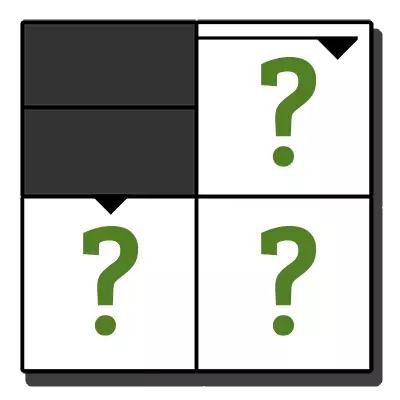
One of the most common places where *pagina* makes a delightful appearance for English speakers is in the realm of crossword puzzles. Clues like "Buch-, Blattseite (lateinisch)" (Book page, Latin) or similar variations frequently point to the six-letter solution: PAGINA. This niche use highlights its status as an archaic but well-recognized term within specific intellectual and linguistic contexts. It's a testament to its enduring role in lexical memory, even if not in everyday conversation. For crossword enthusiasts, knowing this term is a valuable piece of linguistic trivia. Indeed, you can delve deeper into this specific application by reading Crossword Clues: PAGINA, The Archaic Term for Book Pages.
Academic and Historical Research
For scholars of classical antiquity, medieval history, or the history of the book, *pagina* is not obsolete at all; it's a vital part of their working vocabulary. When translating ancient texts, describing manuscript layouts, or discussing early printing techniques, referring to the "pagina" adds precision and authenticity to their discourse. Understanding "Veraltet Buch Blattseite" in this context is essential for accurately interpreting historical documents and the evolution of written culture.
Linguistic Studies and Romance Languages
As noted earlier, *pagina* lives on robustly in Romance languages. When a Spanish speaker says *página*, or an Italian speaker says *pagina*, they are using the direct descendant of the Latin term, entirely without any sense of it being obsolete. This underscores how language evolves differently across cultures and highlights the interconnectedness of European linguistic heritage. Studying *pagina* helps linguists trace these fascinating pathways of word evolution.
Technical and Bibliographic Use
In highly specialized fields like bibliography and library science, terms rooted in Latin often persist for clarity and historical accuracy. While "page" is the common term, the distinction between a "leaf" (folio) and a "page" (pagina – one side of a leaf) can sometimes be important in detailed descriptions of rare books and manuscripts. Thus, while not widely used, the precision offered by the Latin terms ensures their occasional, critical reappearance.
Preserving Linguistic Heritage: Why Veraltet Buch Blattseite Matters
The concept embodied by "Veraltet Buch Blattseite" is far more than just an academic curiosity; it represents a crucial thread in the tapestry of human communication. To label a term "obsolete" doesn't diminish its value but rather elevates it to the status of a historical artifact, a linguistic fossil that provides invaluable clues about the past.
Understanding *pagina* and its journey from ancient scrolls to modern screens offers profound insights into:
- The Evolution of Knowledge: How humans have sought to record, preserve, and transmit information across millennia.
- The Power of Language: How words adapt, transform, and endure, shaping our thoughts and interactions.
- Cultural Continuity: The ways in which ancient concepts continue to influence contemporary practices, even if subtly.
For anyone fascinated by the written word, delving into the meaning of "Veraltet Buch Blattseite" and its Latin counterpart, *pagina*, is a rewarding exercise. It reminds us that every word has a story, and even those deemed "obsolete" play a vital role in our collective linguistic heritage. By appreciating these older terms, we not only enrich our vocabulary but also deepen our understanding of the rich, complex, and ever-evolving history of human expression.